GENZANONSEC’s Projects
Python Network Traffic Analyzer
A Python-based network traffic analyzer built on Ubuntu using Scapy.
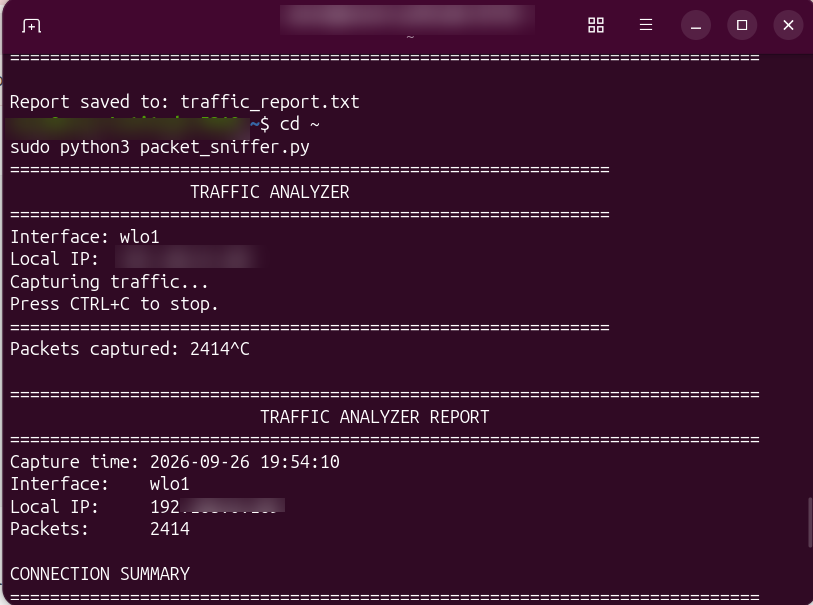
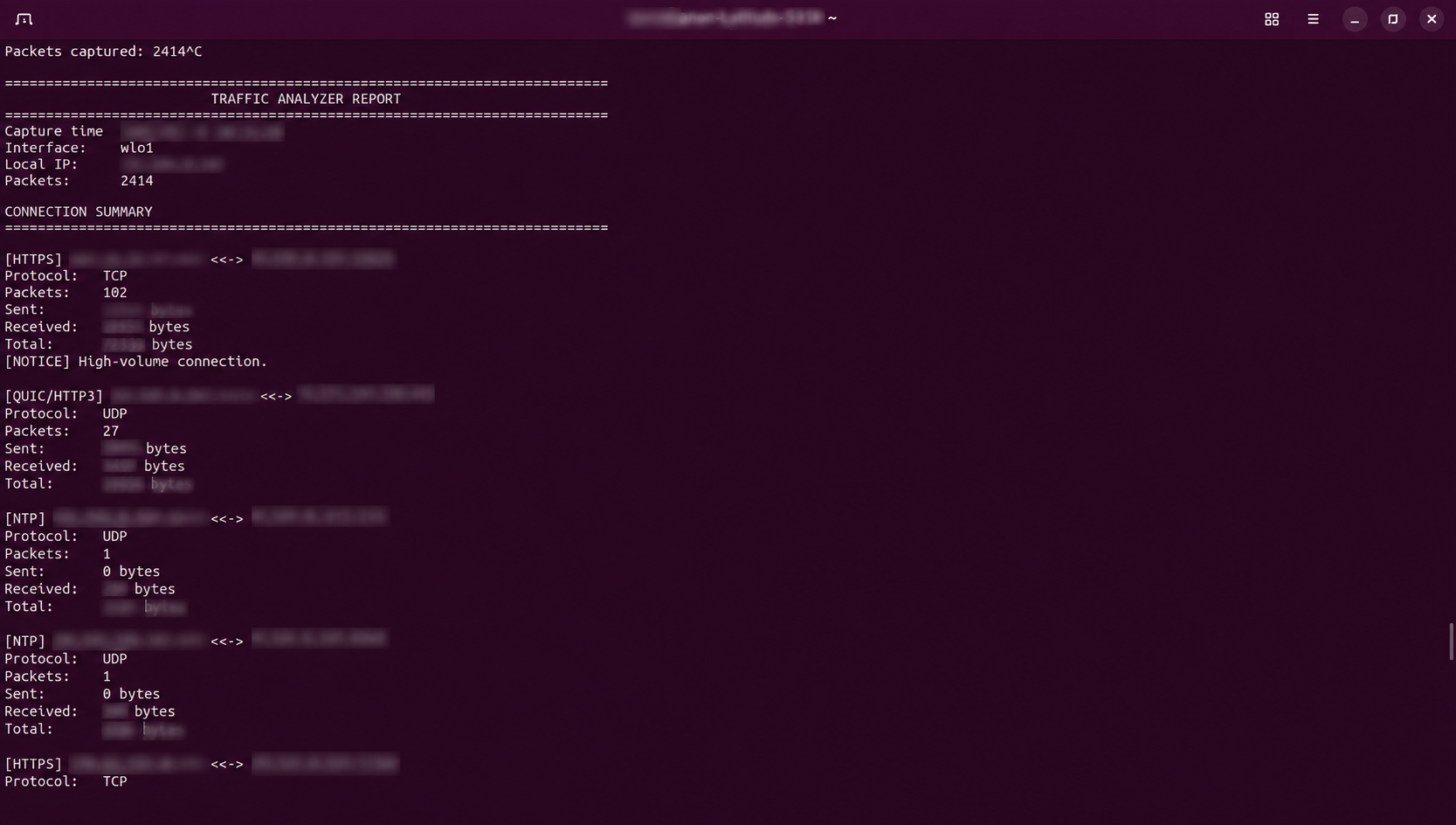
This project captures TCP and UDP traffic from a local network interface, organizes packets into network conversations, identifies common services, tracks traffic volume, and generates a timestamped analysis report.
Features
Real-time TCP and UDP packet capture
Bidirectional connection tracking
Common service identification
Packet counting
Sent and received byte tracking
Traffic volume analysis
Basic anomaly notices
Timestamped report generation
Graceful shutdown with Ctrl+C
How It Works
The analyzer uses Scapy to capture packets from a selected network interface.
For each TCP or UDP packet, it extracts:
Source IP address
Destination IP address
Source port
Destination port
Protocol
Packet size
The program then groups traffic into connections and tracks packet counts and data transferred in each direction.
At the end of a capture, the program generates a timestamped traffic report.
Gen Z Anon Sec
·
Gen Z Anon Sec
·
GEN Z ANON SEC
·
Gen Z Anon Sec · Gen Z Anon Sec · GEN Z ANON SEC ·
Our Mini Projects
-

python-network-traffic-analyzer
A Python-based network traffic analyzer built on Ubuntu using Scapy.
-

bruteforce-detection-lab
This project is a small local cybersecurity lab built on Ubuntu to understand how brute-force attacks work and, more importantly, how to stop them.
-

password-security-tool
I got tired of just reading about password security, so I decided to build a small tool and see what actually happens to a password when you throw it into a hashing function.
-

web-vulnerability-scanner
Scan for safety on your own terms. Trust no one! Maybe yourself, I guess. That is where security begins.
XSS Lab & Scanner
A small cybersecurity project I built to learn how Cross-Site Scripting (XSS) works and how it can be detected.
The project includes a deliberately vulnerable Flask application where I can safely test different types of XSS locally, along with a Python scanner that checks for reflected input.
What this project covers
Reflected XSS
Stored XSS
DOM-Based XSS
Basic XSS detection
HTTP requests
Python and Flask
Client-side JavaScript
What I Learned
This project gave me hands-on practice with:
How reflected, stored, and DOM-based XSS work
How unsafe handling of user input can create vulnerabilities
How JavaScript can introduce client-side security issues
Sending HTTP requests with Python
Building a basic vulnerability scanner
Testing vulnerabilities in a controlled environment
Why We Built It
I wanted to move beyond just reading about XSS and actually build a small lab where I could reproduce the vulnerabilities myself.
The next step is to improve the scanner and add more security testing features.
Safety
This application is intentionally vulnerable!! It’s meant for local security testing and learning.
Only use the scanner and lab against systems you own or have explicit permission to test.